
Osteopathy for babies in Sheffield
Could tongue tie be affecting your baby's feeding?
We can help you to explore what may be making feeding difficult, so that you can feel clearer about what’s going on, and confident about what to do next.
Testimonials
What our clients say
Helping you and your baby when feeding feels difficult
If you’re exploring whether your baby might have a tongue tie, you’re probably already navigating feeding challenges, conflicting advice and a lot of unanswered questions.
Perhaps breastfeeding is painful. Maybe your baby is struggling to latch, becoming frustrated during feeds or simply doesn’t seem to be feeding as effectively as you’d expect.
Many families arrive at our clinic after somebody has suggested a tongue tie. Others have already seen a tongue tie practitioner and are wondering whether osteopathy could still be helpful.
At The Osteopathic Practice, we’re here to listen, understand your baby’s individual story and help you feel more confident about the next steps.
The good news is that these approaches often work very well together.
Supporting Babies with Tongue Tie
A tongue tie occurs when the frenulum — the piece of tissue underneath the tongue — restricts how freely the tongue can move.
This can sometimes affect how a baby feeds, although every baby is different.
Parents often come to us if they’ve noticed:
- Difficulty latching
- Long or tiring feeds
- Frustration during feeding
- Poor milk transfer
- Clicking sounds during feeding
- Discomfort for mum during breastfeeding
It’s important to remember that not every feeding difficulty is caused by a tongue tie.
Feeding involves much more than just the tongue itself. The tongue works as part of a wider system that includes the jaw, mouth, neck and muscles involved in coordinating feeding.
That’s why we take the time to understand your baby as a whole, rather than focusing only on one diagnosis.
How we think about Osteopathy
Parents often come to us because their baby has been given a diagnosis such as tongue tie, reflux, colic, plagiocephaly or torticollis.
From an osteopathic perspective, we’re less interested in the diagnosis, but more in the baby in front of us.
We want to understand your baby’s pregnancy, birth and early experiences, and how their body has adapted along the way.
Rather than treating a condition, we use gentle osteopathic techniques to identify and address patterns of tension, strain or restriction that may be affecting a baby’s comfort and function.
By helping babies feel more comfortable in their bodies, we aim to support their natural growth, development and ability to adapt.


How Osteopathy can help with tongue tie
Every Happy Baby Check begins with a listening session.
This gives us the opportunity to understand your baby’s feeding journey, pregnancy, birth, sleep patterns, settling and any concerns you may have as a parent.
This helps us understand not just the symptoms, but the baby behind them.
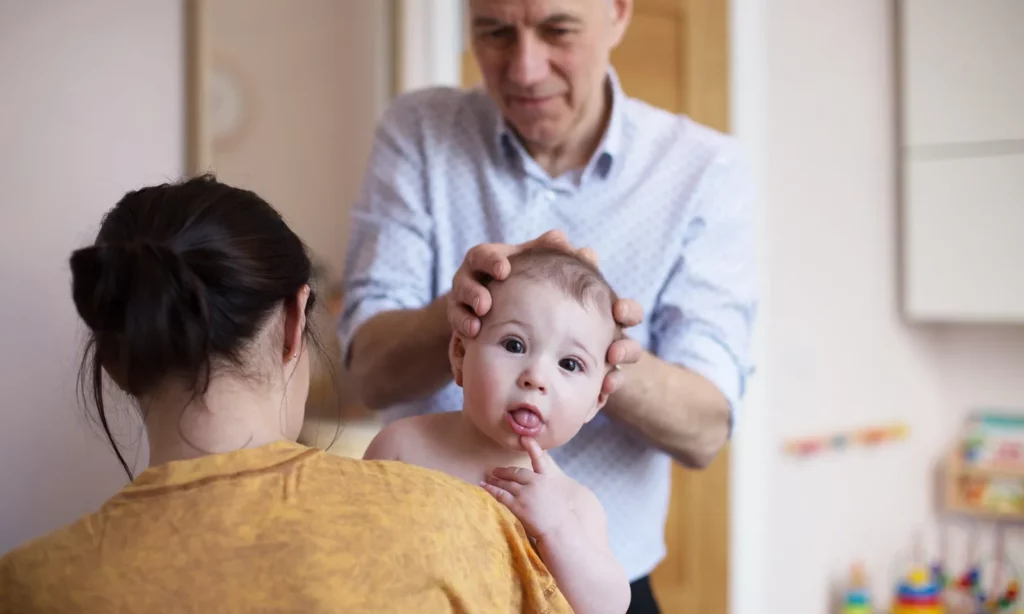
The second part of the appointment is the comfort check.
This is where we gently assess your baby’s movement, comfort and overall function.
We may look at areas such as:
- The neck
- The jaw
- The muscles involved in feeding
- Overall movement and comfort
- How easily your baby coordinates feeding
Parents are often surprised by how gentle this process is. There is no forceful manipulation, clicking or sudden movements. Many babies remain relaxed throughout treatment and some even fall asleep.
If osteopathic care may be appropriate, we’ll explain what we find and discuss the best next steps for your baby.
Tongue Tie Release
Before a tongue tie release
Some tongue tie practitioners recommend osteopathy before a tongue tie release.
This is because feeding difficulties are not always caused by the frenulum alone.
A baby may show signs commonly associated with tongue tie, but other factors may also be contributing to feeding challenges.
By taking a step back and assessing your baby as a whole, osteopathy can help families gain a clearer understanding of the wider picture before making decisions about treatment.
After a tongue tie release
Osteopathy can also be helpful after a tongue tie release.
Once a baby has more freedom of movement through the tongue, there can be a period of adjustment while they learn to use this new movement more effectively.
Tongue tie practitioners will often provide exercises to encourage improved tongue function following a release. Osteopathy may also support comfort and help babies adapt to these changes.
Our focus is always on supporting your baby’s comfort, movement and overall well being.
Benefits of Osteopathy alongside tongue tie care
Parents who seek osteopathic treatment alongside tongue tie care are often looking for support with:
- Feeding comfort
- Latching and positioning
- Overall comfort and settling
- Ease of movement through the neck and jaw
- Adaptation before or after a tongue tie release
Perhaps the greatest benefit is having the opportunity to discuss your concerns in detail and have your baby assessed as a whole person, rather than focusing on a single diagnosis in isolation.

How we work together
Book an appointment
Share your experience and feel heard
Get started on your baby’s customised treatment plan
When might a baby benefit from an assessment?
Families often come to see us if they’ve noticed that their baby:
- Struggles to latch
- Becomes frustrated during feeds
- Takes a long time to feed
- Seems uncomfortable during feeding
- Prefers turning their head to one side
- Has difficulty settling after feeds
- Has been diagnosed with or is being assessed for tongue tie
Sometimes parents come simply because something doesn’t feel quite right and they would like someone to listen, assess and help them better understand what may be happening.

What happens during a Happy Baby Check?
Your appointment begins with a listening session, where we’ll take time to understand your baby’s journey so far, including pregnancy, birth experience, feeding, sleep and any concerns you may have.
We’ll then carry out a gentle comfort check, looking at your baby’s movement, comfort and overall function, talking you through anything that we notice.
If osteopathic care may be appropriate, we’ll explain everything clearly before beginning any treatment. Babies’ bodies are still developing, so we use very gentle techniques adapted to their age and stage.
There is always an opportunity for feeds, cuddles and breaks whenever they’re needed. We’ll make a recommendation about how many sessions we think will be required to have your baby feeling comfortable in their body.
Our aim is to help you better understand your baby and provide reassurance that comes from feeling listened to, supported and informed.
Frequently asked questions
Common signs of tongue tie can include difficulty latching, feeding taking a long time, frustration during feeds, poor milk transfer and discomfort for mum when breastfeeding.
Some babies may struggle to stick their tongue out beyond their mouth, and in some cases the frenulum underneath the tongue is clearly visible.
It’s important to remember that not every feeding difficulty is caused by a tongue tie, which is why a thorough assessment can be so helpful.
Osteopathic care can usually begin very soon after a tongue tie release.
We often work with babies in the days following a release, helping to assess how they are adapting to changes in tongue movement and feeding.
Treatment is always tailored to the individual baby and what is appropriate for them at that stage.
If a tongue tie is significantly affecting feeding, it is generally best to seek advice as soon as possible.
Early assessment can help families understand whether a tongue tie is present, whether it may be contributing to feeding difficulties and what support options may be available.
Every baby is different, so there is no fixed number of sessions that is right for everyone.
Some babies may only need one or two follow-up appointments, while others may benefit from additional support depending on their feeding difficulties and individual needs.
During your Happy Baby Check, we’ll assess your baby as a whole and discuss any recommendations based on what we find.
No. You can book directly with The Osteopathic Practice without a referral.
Further reading
If you’d like to learn more about how osteopathy can support your baby and family, you may find these pages helpful: