
Osteopathy for babies in Sheffield
Concerned about your baby's flat head or head shape?
We can help explore why your baby may favour one side, so that you can feel clearer about what’s going on, and confident about what to do next.
Testimonials
What our clients say
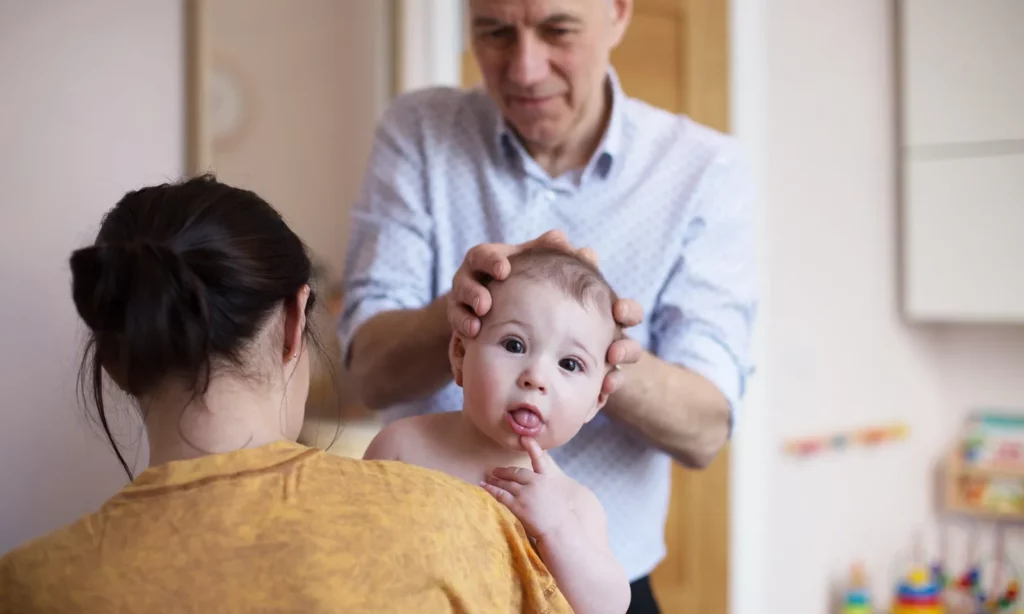
My baby has a flat spot – what now?
If you’ve noticed a flat area on your baby’s head, you’re certainly not alone. Many parents become concerned when they spot a flat spot or are told their baby has positional plagiocephaly. They often wonder whether it’s something they should be worried about and whether cranial osteopathy might help.
The good news is that in many cases there are things that can help.
At The Osteopathic Practice, we regularly see babies with plagiocephaly and flat head syndrome. Understanding why it has happened and how your baby’s body is adapting is often the first step towards helping things improve.
Understanding plagiocephaly and flat head syndrome
Plagiocephaly is the term used to describe a flattening on one side of a baby’s head. If you look down from above, their head may appear slightly misshapen or asymmetrical.
We often see babies whose head shape has been influenced by their journey into the world. Sometimes a baby has been positioned awkwardly during pregnancy. In other cases, a long or difficult labour may have resulted in extra pressure being placed on parts of the baby’s head.
In some cases, plagiocephaly is present from birth. In others, it develops during the first few weeks or months of life.
Rather than focusing solely on the flat spot, osteopathic treatment for babies with plagiocephaly aims to understand the wider patterns of tension and strain that may be present within their body.

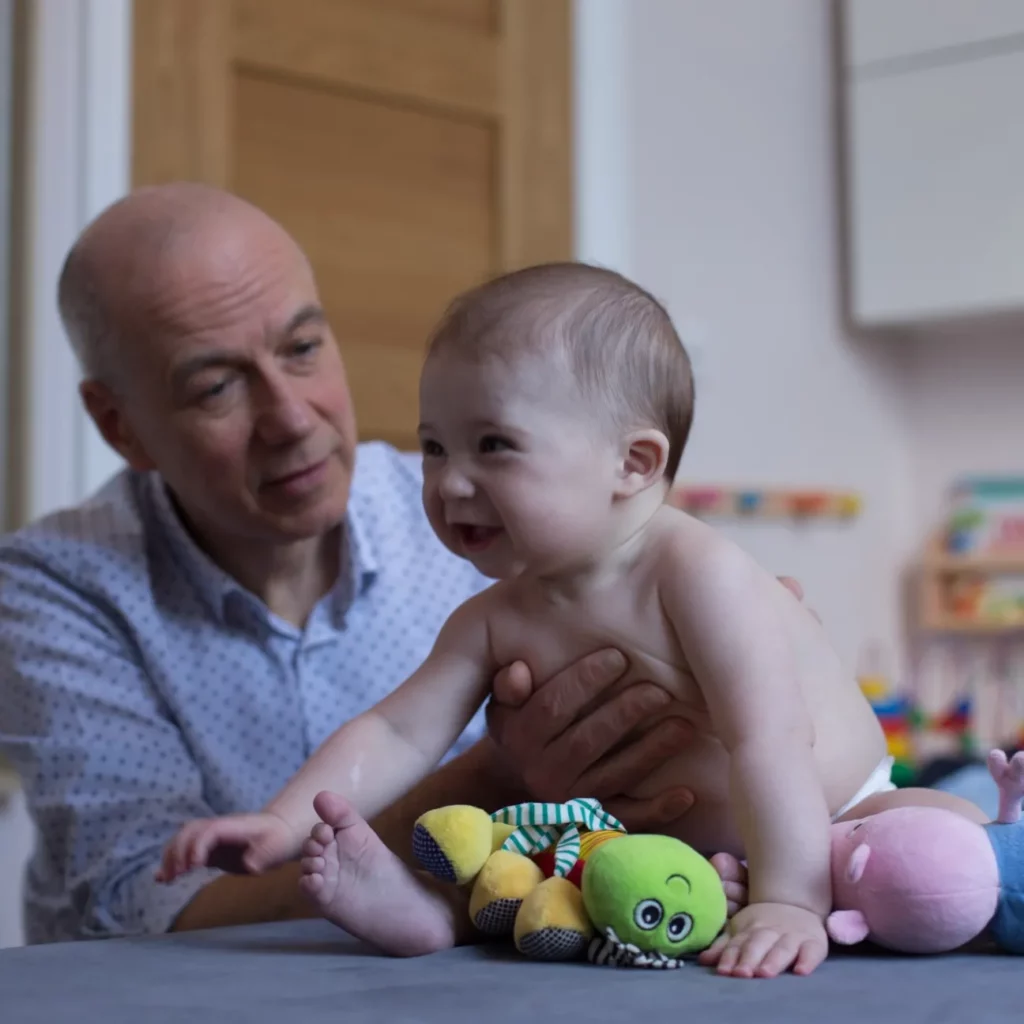
How we think about Osteopathy
Parents often come to us because their baby has been given a diagnosis such as tongue tie, reflux, colic, plagiocephaly or torticollis.
From an osteopathic perspective, we’re less interested in the diagnosis, but more in the baby in front of us.
We want to understand your baby’s pregnancy, birth and early experiences, and how their body has adapted along the way.
Rather than treating a condition, we use gentle osteopathic techniques to identify and address patterns of tension, strain or restriction that may be affecting a baby’s comfort and function.
By helping babies feel more comfortable in their bodies, we aim to support their natural growth, development and ability to adapt.
What is Osteopathy and how can it help babies with plagiocephaly?
Osteopathy is a hands-on approach that focuses on how the body functions as a whole.
Every Happy Baby Check appointment begins with a listening session, where we take time to understand your baby’s story, including pregnancy, birth, feeding and sleeping and any concerns you have as a parent.
The second part of the appointment is the comfort check. This is where we gently assess your baby’s movement, comfort and overall function.
We look at how your baby moves and whether there are areas where they may be holding tension, including around the head, neck or other areas of the body.
Although the flat spot may be visible on the head, the tension patterns associated with it can sometimes extend through other parts of the body too. This is why treatment involves assessing the whole baby rather than focusing solely on the area that looks flattened. Our aim is not to force change from the outside. Instead, we work with the body’s own ability to adapt, helping release patterns of tension and encourage greater balance throughout the baby’s system.

Identifying positional plagiocephaly in babies
Many parents don’t notice plagiocephaly straight away because they naturally spend most of their time looking at their baby face-to-face.
The flattening is often easier to notice when looking down from above.
Common signs of positional plagiocephaly include:
- A flatter area on one side or the back of the head
- An uneven or asymmetrical head shape
- One side of the forehead appearing slightly more prominent
- One eyebrow appearing slightly further forward than the other
- A preference for turning the head to one side
Some babies may also find it easier to look one way than the other. If they consistently rest with their head turned in the same direction, pressure is repeatly placed on one area of the skull. Because a young baby’s skull is still soft and mouldable, a flat spot can gradually develop.
When might a baby benefit from an assessment?
One of the most common questions we hear from parents is whether a flat spot is simply a normal variation in head shape or whether it is something that needs attention.
In many cases, a flat spot develops because a baby spends a lot of time resting in the same position. However, if you notice that your baby consistently prefers looking in one direction, struggles to turn their head equally both ways, or the asymmetry seems to be becoming more noticeable, it can be helpful to have them assessed.
We often find that a flat spot is associated with some restriction or tension elsewhere in the body, particularly around the upper part of the neck. Identifying these patterns early can help support your baby’s natural development.
Many parents simply want reassurance. Even if treatment isn’t needed, an assessment can help you understand what you’re seeing and feel more confident about supporting your baby.
A gentle approach to understanding your baby
Every baby has their own story. Understanding what has happened from pregnancy through to those early weeks helps us build a clearer picture of how they are moving, adapting and responding.
During your listening session, we’ll take the time to hear your concerns before carrying out a gentle comfort check to assess your baby’s movement.
We’ll explain everything we find along the way, answer any questions you have and discuss whether osteopathic care may be appropriate for your baby.


Benefits of Osteopathic care for babies with plagiocephaly
Parents often ask how osteopathy compares with other treatment options.
Two of the most common alternatives are:
Physiotherapy Exercises
Physiotherapy exercises to encourage better neck movement.
Helmet Therapy
In severe cases, helmet therapy designed to guide head growth as the baby develops.
Both approaches can be helpful.
In our experience, osteopathy can often work well alongside these treatments because each addresses the problem in a different way.
Physiotherapy and helmet therapy work primarily from the outside, encouraging change through exercises or external support.
Osteopathy works from the inside, supporting the body’s own adaptive processes and helping babies release patterns of tension that may be affecting movement and development.
The body is naturally programmed to seek balance and symmetry. Osteopathic care aims to support those natural adaptive processes.
When a flat spot has developed because a baby is unable to comfortably turn their head in both directions, improvements can sometimes happen surprisingly quickly. As neck movement improves, babies often begin sleeping with their heads in different positions, reducing repeated pressure on the affected area.
Many parents report noticing improvements in head shape over the course of a few treatments, with continued improvement occurring throughout the first year as the skull continues to grow and develop.
How we work together
Book an appointment
Share your experience and feel heard
Get started on your baby’s customised treatment plan
What happens during a Happy Baby Check?
Your appointment begins with a listening session, where we’ll take time to understand your baby’s journey so far, including pregnancy, birth experience, feeding, sleep and any concerns you may have.
We’ll then carry out a gentle comfort check, looking at your baby’s movement, comfort and overall function, talking you through anything that we notice.
If osteopathic care may be appropriate, we’ll explain everything clearly before beginning any treatment. Babies’ bodies are still developing, so we use very gentle techniques adapted to their age and stage.
There is always an opportunity for feeds, cuddles and breaks whenever they’re needed. We’ll make a recommendation about how many sessions we think will be required to have your baby feeling comfortable in their body.
Our aim is to help you better understand your baby and provide reassurance that comes from feeling listened to, supported and informed.

What age is best to start Osteopathic care for babies with Plagiocephaly?
The earlier, the better. The first few weeks and months of life offer the greatest opportunity for change because your baby’s skull is growing rapidly and their body is adapting quickly.
That doesn’t mean older babies won’t benefit, but early assessment often allows us to identify and address restrictions before a flat slot becomes more established.
Frequently asked questions
Plagiocephaly can develop due to positioning during pregnancy, pressure during labour, or restrictions in neck movement after birth. Some babies naturally prefer looking one way, which can place repeated pressure on the same area of the skull.
Most babies with plagiocephaly do not require surgery. Common approaches include repositioning advice, physiotherapy, helmet therapy in some cases, and osteopathic treatment.
Cranial osteopathy may help when a baby’s flat head is associated with restrictions in movement or patterns of tension within the body. By releasing tension and helping babies move more freely, osteopathic treatment can support the natural changes that occur as the head continues to grow during the first year of life.
Every baby is different, but many parents notice improvements in head shape and neck movement over the course of a few sessions, particularly when treatment begins early.
No. You can book directly with The Osteopathic Practice without a referral.
Further reading
If you’d like to learn more about how osteopathy can support your baby and family, you may find these pages helpful: